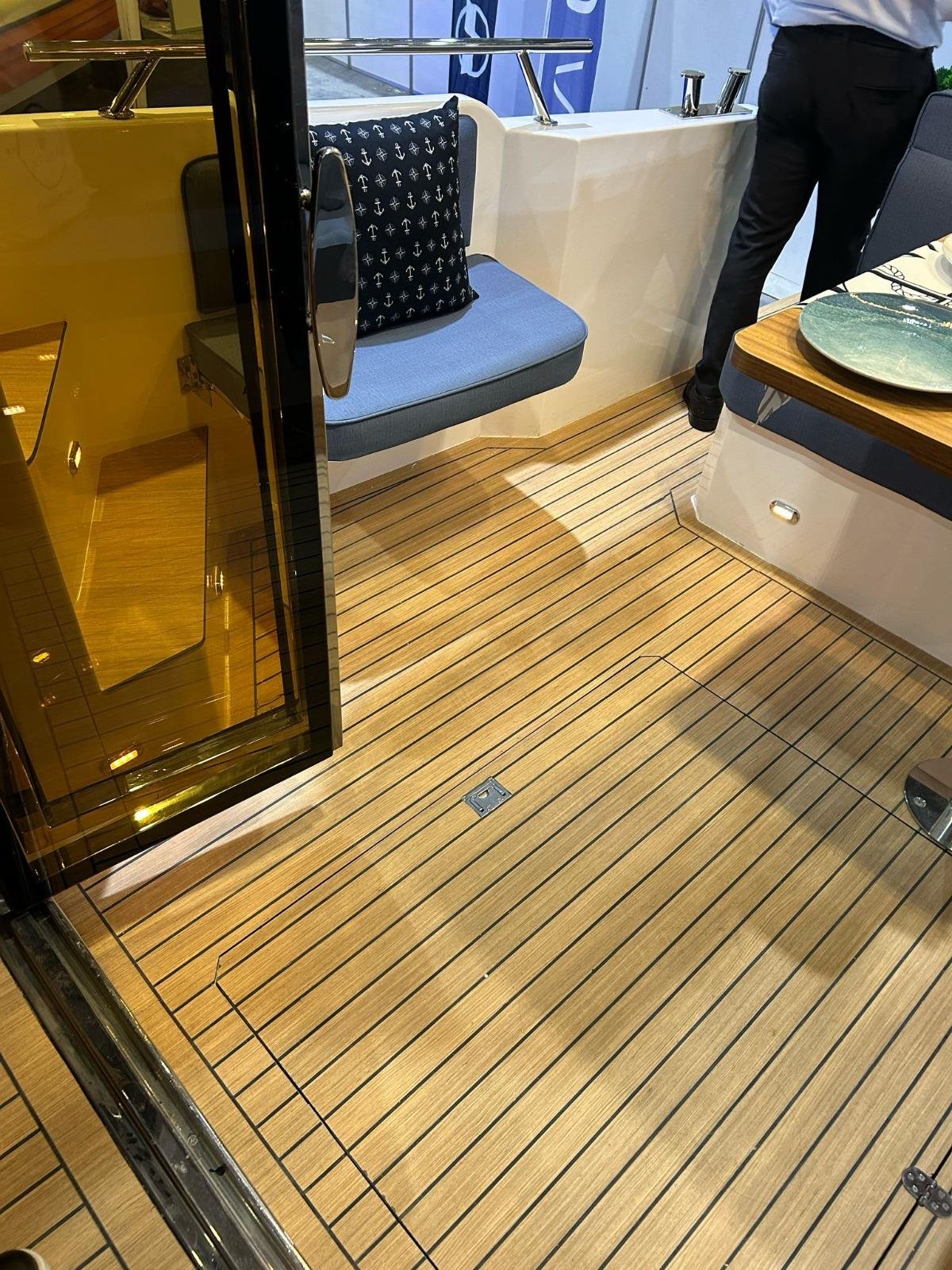
A yacht or boat floor works under a set of loads you never meet on land: constant moisture, salty air, deck wash-downs, vibration and movement under way, a tight weight budget and heavy foot traffic. Under these conditions a floor that merely "looks good" is not enough; you need a surface that won’t swell in moisture, is easy to maintain, is lightweight and is hygienic. This guide compares the main options used on yacht floors — solid teak, synthetic teak, marine carpet and marine vinyl — with compact laminate, and explains why compact laminate stands out for interior yacht floors.
What is compact laminate for yacht floors?
Compact laminate is a solid, self-supporting panel material made by pressing many resin-impregnated kraft-paper layers together with a decor paper and a protective surface under high pressure. The G-Com compact laminate we use for boat and yacht floors is produced under EN 438, typically 2–25 mm thick; both faces are decorative and the surface is non-porous. This means high resistance to water, moisture, impact and wear. You can find the full product profile on our Compact Floor Covering page.
Yacht-floor alternatives: a comparison
| Floor type | Water & moisture | Maintenance | Hygiene | Key note |
|---|
| Compact laminate (G-Com) | Non-porous; suited to wet areas | Low; wipe, wash if needed | Non-porous, easy to disinfect | Self-supporting; CNC cut to shape; wide decor range (incl. wood/teak looks) |
|---|
| Solid teak | Naturally durable, but moves with moisture | High; periodic oiling/sanding | Good; joints and seams need care | Classic look, but heavy, costly and greys over time |
|---|
| Synthetic teak (PVC/composite) | Water-resistant | Medium | Good | Mostly for decks; can get hot in the sun |
|---|
| Marine carpet | Holds moisture | Hard; staining and odour issues | Poor; mould/damp risk | Comfortable, but not ideal for wet areas or heavy use |
|---|
| Marine vinyl | Water-resistant | Medium | Seams are a weak point | Light; a soft surface can retain permanent marks |
|---|
The table gives general guidance; the final choice should follow the boat’s use and the area (saloon, cabin, wet area).
Moisture and salty air: the real test of a yacht floor
In a marine environment the floor constantly meets moisture, condensation and occasional direct water. Solid teak is naturally durable but, being wood, expands and contracts with moisture and needs upkeep; marine carpet draws moisture in and carries odour and mould risk. Compact laminate’s non-porous core, by contrast, won’t absorb water; in a wet area it does not swell, bubble or lose its form. This is the clearest difference on interior wet-area and galley floors.
Maintenance load: teak’s weak point
One of the biggest time and cost items for yacht owners is teak deck/floor upkeep: periodic oiling, sanding and renewing a surface that greys in the sun. Compact laminate removes that cycle; everyday cleaning and washing where needed is enough, and it requires no periodic maintenance such as painting, varnishing or oiling. It is a practical alternative for projects that "want the teak look without the teak upkeep".
Weight: every kilo counts on a boat
Floor weight matters on a boat for performance, fuel and trim. Solid teak is relatively heavy; compact laminate offers a durable surface at a more controlled weight for its thickness and needs no heavy substructure like ceramic. Its self-supporting build lets it be applied inside the boat without an added body.
Hygiene: a non-porous surface, unlike carpet
Marine carpet is comfortable but draws in moisture, salt and spills, and can develop odour and mould over time. Compact laminate’s non-porous surface won’t hold liquids or microorganisms; it cleans easily with everyday cleaning and pressure washing where needed. That is an advantage especially in galley and wet-area (heads/shower) floors.
Safety when wet: an anti-slip texture option
On a moving boat, slipping on a wet floor is an important safety topic. Compact laminate offers an anti-slip textured surface option that gives safe footing even when wet; the appropriate texture level is determined together based on the application.
Made-to-shape CNC cutting: a perfect fit to the hull
Yacht and boat floors are not plain rectangles; they include curved edges, templates, hatch openings and cut-outs. Compact laminate panels can be cut to the millimetre, shaped and given a custom surface pattern such as a teak/wood texture with CNC based on the dimensions and templates you send. A stock-size floor covering rarely offers this flexibility.
Look: teak aesthetics without teak upkeep
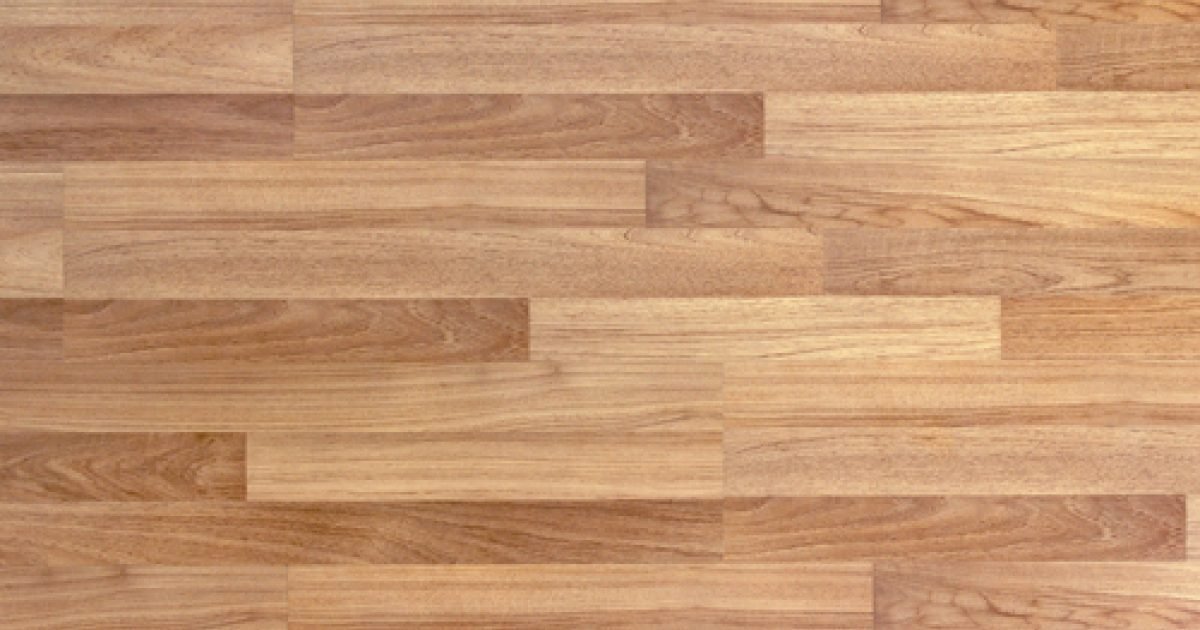
Compact laminate comes in a wide decor collection; many textures are possible, including wood- and teak-look surfaces. This keeps the classic yacht aesthetic while avoiding the periodic maintenance of real wood.
Interior, wet areas and a note on open decks
We recommend compact laminate as a strong option for a yacht’s interior saloon, cabins, galley, wet areas and sheltered floors. For open decks under constant direct sun and outdoor weather, a purpose-made exterior/UV panel should be evaluated separately; for such applications it is best to determine the right panel together.
Where is it used on a yacht?
- Saloon and seating area: an elegant, easy-to-clean floor that withstands heavy foot traffic.
- Cabins: a moisture-resistant, hygienic and quiet surface.
- Galley: a non-porous floor resistant to stains and water.
- Wet areas (heads/shower): a waterproof, anti-slip textured surface.
- Corridors, stairs and entries: a durable, wear-resistant transition floor.
Questions to ask when choosing a yacht floor
- Will the floor be constantly exposed to moisture, condensation or deck wash-down?
- Is your weight budget tight; do you need a light, self-supporting solution?
- How much time do you want to spend on upkeep? (Solid teak needs regular maintenance.)
- Is the floor a curved/irregular shape; is made-to-shape cutting needed?
- Must the surface be anti-slip when wet?
In short
For interior yacht and boat floors, compact laminate is a balanced choice against solid teak, synthetic teak, marine carpet and marine vinyl — thanks to its non-porous body that won’t swell in moisture, its low maintenance, its controlled weight, its hygienic surface and its suitability for made-to-shape CNC cutting. It even delivers the classic aesthetic through teak-look decors without the wood upkeep. For product details see Compact Floor Covering, and for made-to-measure cutting see our CNC services.
Sources
#yacht flooring
#boat flooring
#compact laminate
#solid teak
#synthetic teak
#marine carpet
#marine vinyl
#marine
#EN 438
 Plate & Panel Products
Manufacturer
Plate & Panel Products
Manufacturer

 ®
®